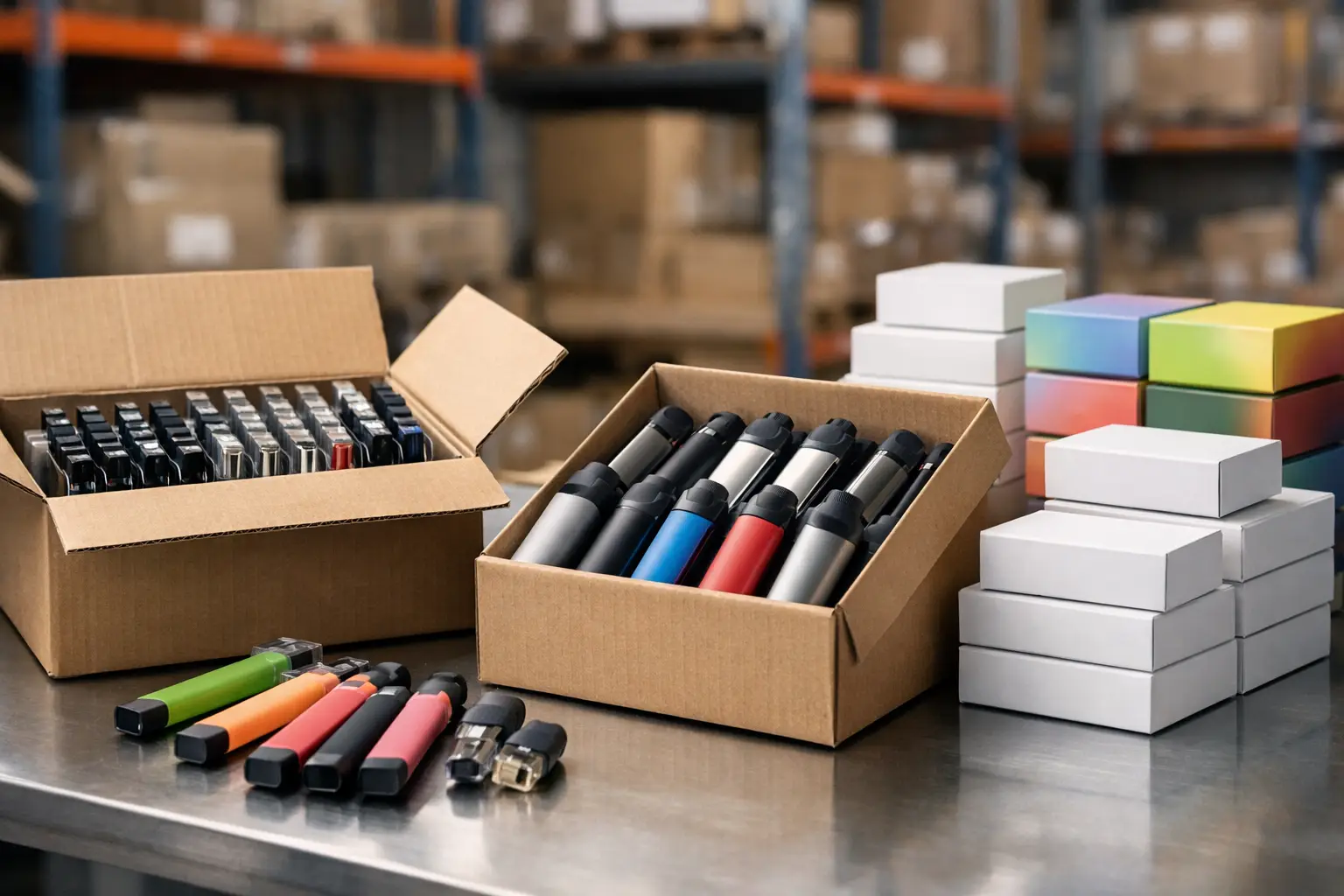


Stock gaps cost more than a missed sale. They disrupt reorder cycles, push buyers towards substitute lines, and create avoidable pressure on margins. That is why IGET wholesale Australia matters to commercial buyers who need genuine product, stable availability, and a distributor that can fulfil trade orders without delay.
For pharmacies, specialist vape retailers, convenience-led stockists, and other approved channels, the issue is rarely product awareness. The market already knows the IGET range. The real question is whether your wholesale supply partner can support repeat purchasing with verified stock, clear account terms, and fast domestic dispatch. That is a supply-chain question, not a branding one.
What trade buyers actually need from IGET wholesale Australia
At wholesale level, demand is only one part of the decision. A recognised SKU is useful, but only if supply holds. When buyers assess IGET wholesale Australia options, they are usually looking at four operational factors at once – authenticity, pricing structure, product breadth, and delivery reliability.
Authenticity sits first for a reason. Counterfeit risk damages more than a single transaction. It affects customer trust, creates compliance concerns, and can turn a fast-moving line into a customer service problem. A wholesale supplier should be able to demonstrate genuine product verification as part of normal trade supply, not as an afterthought.
Pricing is the next filter. Competitive wholesale rates matter, but so does the structure behind them. Tiered pricing only works when it is clear, commercially realistic, and aligned with reorder behaviour. If minimum order quantities are vague or inconsistent, procurement becomes harder than it needs to be.
Then there is product depth. Trade buyers are not just sourcing a brand name. They are managing a catalogue. If the supplier carries major IGET lines such as IGET Bar, IGET Bar Plus, IGET King, IGET Moon, and IGET Bar Pro, with flavour-level availability, the account is easier to run. A shallow range creates patchy replenishment and forces more split ordering.
Shipping reliability closes the loop. Fast dispatch is useful, but trackable domestic freight is what gives buyers confidence. If an order is moving through an Australian distribution network with visibility and predictable handling, store-level planning becomes more accurate.
Why recognised IGET SKUs keep moving
The IGET product family remains commercially relevant because it covers different customer preferences without making range planning overly complex. For the retailer or pharmacy buyer, that matters. A product line that is too fragmented can tie up capital in slow stock. A product line with recognisable models and flavour demand is easier to replenish with discipline.
IGET Bar and IGET Bar Plus continue to attract steady attention because they sit in familiar demand pockets. IGET King and IGET Moon serve buyers who want to cover broader customer preferences across device style and usage expectations. IGET Bar Pro extends the range with another recognised option that can support more tailored stock selection.
That said, not every SKU performs equally in every location. Metro stores may move a different flavour mix than regional accounts. Pharmacy-led demand can differ from specialist vape retail. A capable wholesale partner understands that reorder behaviour is local and commercial, not theoretical.
Authenticity is not a marketing line
For approved trade buyers, product verification should be built into the wholesale process. If a distributor cannot clearly stand behind authenticity, the transaction carries unnecessary risk. That risk includes returns, customer complaints, reputational damage, and time spent resolving issues that should never have occurred.
A dependable distributor treats genuine product verification as part of account confidence. That means buyers can order with a clearer understanding of what is arriving, how it has been sourced, and why the supply chain is being positioned as trade-ready. In practical terms, verified stock protects margins because it protects sell-through.
This is where a dedicated wholesale operation differs from a casual reseller. A B2B distribution model is structured around repeat volume, not one-off opportunistic supply. The buyer needs consistency between the first carton and the fifth reorder. Anything less creates friction.
Pricing only works when supply is stable
Cheap stock that arrives late or cannot be reordered at the same level is not commercially efficient. Serious buyers already know this. The value of wholesale pricing depends on whether the supplier can support continuity.
Tiered wholesale pricing makes sense when it reflects genuine volume purchasing and repeat trade behaviour. It gives buyers room to improve margin while planning around known order thresholds. But there is a trade-off. Higher volume pricing is only useful if the supplier has the stock depth to maintain fulfilment and if the buyer has enough confidence in sell-through to hold inventory.
That is why many commercial accounts prefer a wholesale partner that balances pricing with supply visibility. If stock levels are inconsistent, the lowest listed rate means very little. If account-based purchasing is straightforward and replenishment is reliable, the total commercial outcome is stronger even before freight is factored in.
The operational value of account-based trade purchasing
Wholesale supply should not feel like consumer retail with larger cartons. Approved business buyers need a process that reflects trade conditions. That includes onboarding, account approval, minimum order clarity, and ordering terms built for commercial use.
An account-based structure helps on several fronts. First, it creates a cleaner path for compliance-oriented onboarding, which matters in regulated categories. Second, it supports more efficient repeat ordering because account details, purchasing history, and trade settings are already established. Third, it helps the distributor manage service levels for genuine business customers rather than mixing trade supply with retail-style demand.
For procurement managers and owners, this is practical rather than procedural. Every minute spent chasing order details, clarifying availability, or correcting invoice issues is a cost. A trade-focused setup reduces that friction.
IGET wholesale Australia and national fulfilment
Domestic shipping speed is important, but consistency matters more over time. Buyers are not just assessing whether the first order arrives quickly. They are evaluating whether the distributor can support ongoing replenishment across Australia with the same level of execution.
A wholesale partner with rapid, trackable domestic shipping gives stores and approved operators better control over inventory planning. That helps reduce over-ordering and lowers the chance of emergency top-up purchases from secondary sources. It also supports cleaner forecasting, especially for accounts that rely on regular movement of core IGET lines.
National fulfilment is not identical across every postcode, and good wholesale operators are realistic about that. Delivery windows can vary depending on location, carrier performance, and order volume. What buyers need is not a promise of perfection. They need a distributor that dispatches promptly, provides tracking, and treats fulfilment as a core capability rather than a bonus feature.
Choosing a wholesale partner for repeat replenishment
When comparing IGET wholesale Australia supply options, the strongest indicator is often not headline pricing. It is whether the distributor behaves like a long-term logistics partner. That means product-specific category depth, dependable stock handling, and communication that supports ordering decisions.
A useful test is to look at how the supplier presents the range. If major IGET models are available with flavour-level detail, the catalogue has likely been built with real trade demand in mind. If the ordering model is centred on approved accounts, minimums, and replenishment support, the business is likely operating as a wholesale specialist rather than a general reseller.
It also helps to assess how clearly the business talks about verification, shipping, and trade capability. Serious wholesalers do not need to oversell. They present the operational basics with confidence because those basics are what matter to buyers.
For businesses sourcing through IGET VAPES Wholesale Australia, the proposition is straightforward: authentic IGET stock, tiered wholesale pricing, account-based trade access, and domestic shipping structured for repeat commercial supply. That is the kind of framework buyers can actually plan around.
Where wholesale decisions usually go wrong
Most supply problems start before the first reorder. Buyers sometimes focus too narrowly on unit cost and overlook the broader purchasing equation. If the supplier cannot maintain stock consistency, if verification is unclear, or if freight handling is weak, the apparent savings disappear quickly.
The better approach is to assess total supply reliability. Can the distributor support your core SKUs? Are minimums workable for your business size and turnover? Is there enough range depth to reduce split sourcing? Will the account structure make repeat ordering easier next month, not just today?
Those questions matter because wholesale success is cumulative. One smooth order is useful. A stable supply relationship is what protects revenue.
If you are buying for resale in Australia, the strongest wholesale decision is usually the one that reduces uncertainty. Genuine product, clear trade terms, reliable stock flow, and fast domestic fulfilment are not extras. They are the operating baseline for a supplier worth reordering from.