
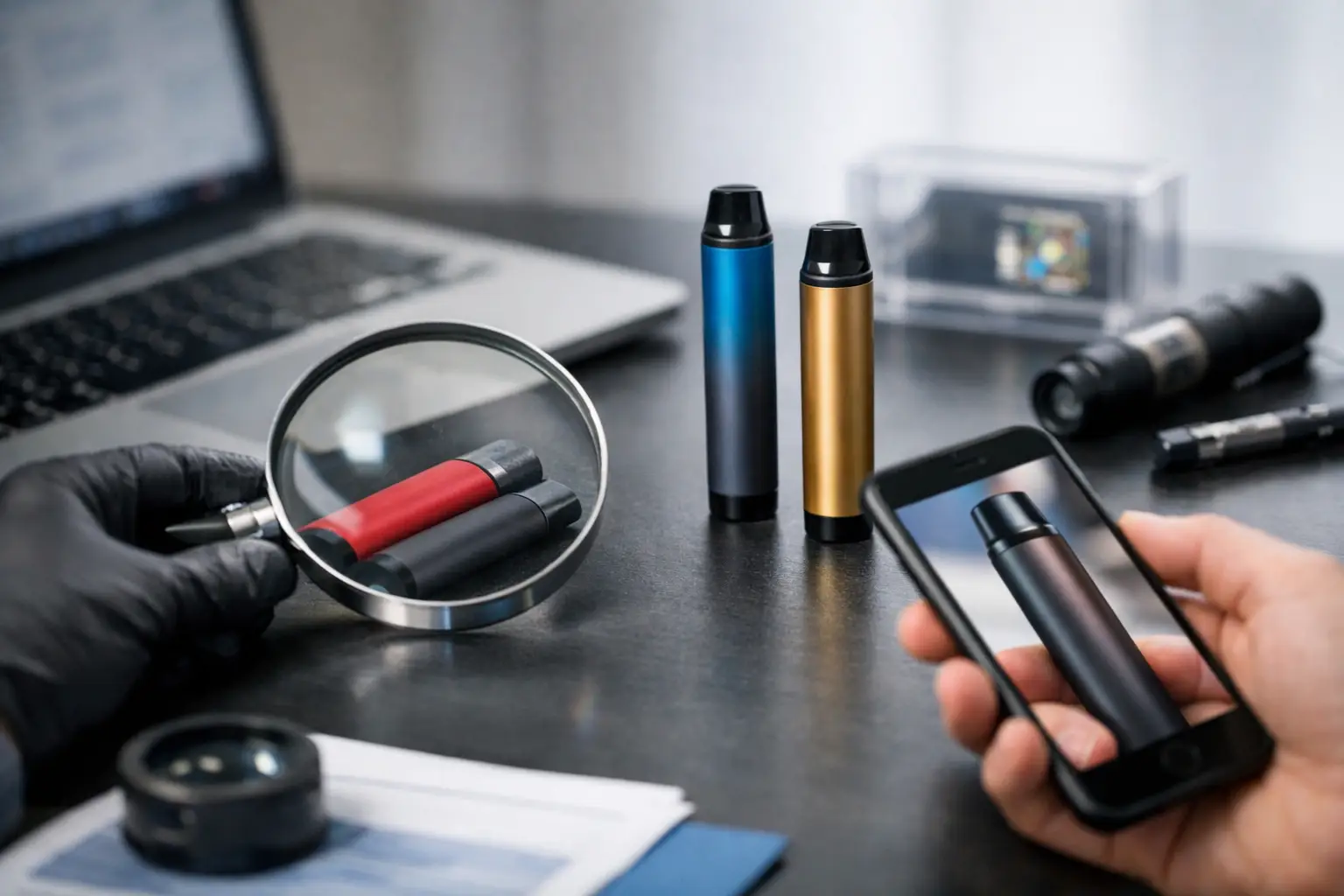
Counterfeit stock does not usually announce itself. It shows up as small inconsistencies – print quality that looks slightly off, flavour names that do not match known SKUs, packaging that feels lighter, or a carton line that suddenly generates more customer complaints than the previous delivery. For trade buyers, that is why knowing how to verify authentic IGET stock is not just a product check. It is a margin, compliance and reputation control.
If you are buying for a pharmacy, vape retailer or other approved resale channel, verification needs to happen before stock reaches the shelf. Once questionable units are mixed into live inventory, the cost goes beyond a credit claim. You are dealing with returns, staff time, lost customer trust and uncertainty across the rest of the order.
How to verify authentic IGET before stock is booked in
The strongest verification process starts at goods-in, not after a problem surfaces. Authenticity checks should sit inside your receiving workflow in the same way you confirm carton counts, SKU alignment and freight condition.
Start with the supplier, because that is where counterfeit risk is either controlled or introduced. A trade distributor should be able to supply clear product identification, commercial invoicing, consistent model availability and repeatable replenishment across recognised IGET lines. If the supply chain feels vague, changes frequently, or cannot explain why one shipment differs from the last, that is already a warning sign.
From there, inspect the physical stock. Genuine IGET product presentation is usually consistent across the same line. Carton print should be clean, colours should be stable from batch to batch, and branding should not look stretched, blurred or misaligned. If one case of IGET Bar or IGET Moon looks materially different from the rest of your order, isolate it immediately rather than booking everything into inventory and sorting it out later.
The same applies at unit level. Font spacing, seal quality, flavour naming and finish should be consistent with known authentic stock you have previously handled. Counterfeit units often get the broad look right while missing smaller details. Those details matter.
Check packaging consistency across the full order
One unit can pass a quick glance while the broader shipment tells a different story. Compare cartons side by side. Look for changes in print density, shade variation, label placement and wrapping quality. If half the order appears to come from one production standard and the other half from another, do not assume it is harmless batch variation.
Batch variation can happen, but it should still look controlled. A legitimate distributor should be able to explain batch transitions, packaging updates or line changes in practical terms. What you do not want is unexplained inconsistency across the same SKU within the same shipment.
Confirm model and flavour logic
Counterfeit supply often breaks pattern. That may show up as model names that are slightly wrong, flavour combinations not commonly associated with a specific device, or outer cartons that do not match the actual units inside.
Experienced buyers usually spot this quickly because they know which lines move in their stores. If an IGET King carton arrives with flavour naming that does not align with prior authentic stock, or if the internal unit coding does not reflect the carton description, treat it as a hold issue, not a minor admin problem.
The supplier check matters more than the product check
If you only inspect the stock and never audit the source, you are solving the problem too late. The most reliable way to reduce counterfeit exposure is to buy through a supplier with stable trade processes, documented inventory control and a clear B2B distribution model.
That means looking at how the supplier operates, not just what they quote. Do they focus on commercial volume supply or do they behave like an opportunistic reseller? Can they support repeat orders of the same IGET SKUs at scale? Do they provide consistent invoice detail and dispatch records? Can they handle account-based purchasing and trackable domestic freight without confusion?
Authenticity is rarely an isolated issue. It usually sits alongside other operational weaknesses such as inconsistent stock levels, poor carton traceability, unclear minimums or delayed dispatch. A supplier that cannot control those basics is less likely to control product integrity.
What to look for when verifying authentic IGET at receiving
Build a receiving checklist your team can apply every time. It does not need to be complicated, but it does need to be consistent.
First, match the purchase order against the delivered carton count and SKU mix. Then inspect outer cartons for tampering, relabelling or irregular sealing. Open sample cartons from multiple points in the shipment, not just the top layer. Compare unit packaging across those samples and check that the presentation is uniform.
Next, review flavour labels, model identifiers and any batch or production markings. If details are missing, inconsistent or unusually hard to read, flag the shipment. Finally, compare the stock against known authentic units from previous clean batches where possible. Internal reference stock is one of the most practical tools a repeat buyer can maintain.
This process is especially important for high-turn lines. Fast-moving products can mask issues because teams want to get stock on shelf quickly. That speed pressure is exactly where counterfeit units slip through.
Keep sample controls from verified batches
One simple control works well for recurring buyers: retain a few units from each verified delivery as a reference set. Keep them labelled by date, supplier batch and SKU. When new stock arrives, your team can compare packaging, finish and product details against a known-good sample instead of relying on memory.
This is not about creating extra admin for the sake of it. It is about reducing decision friction when a questionable batch lands and your receiving team needs a clear benchmark.
Common signs a shipment should be quarantined
Some issues justify immediate hold status. These include mixed packaging standards within the same SKU, spelling or branding anomalies, cartons with poor print resolution, flavour names that do not align with normal product logic, mismatched inner and outer packaging, or stock supplied without proper commercial documentation.
You should also pause any shipment that comes from a supplier who suddenly changes fulfilment patterns without explanation. If lead times, packaging standards and invoice formats all change at once, investigate before you release the stock.
Not every irregularity proves a product is counterfeit. Sometimes manufacturers update packaging, or batches differ slightly. But the correct commercial response is still to quarantine first and confirm second. The cost of a short delay is lower than the cost of selling questionable inventory.
Why trade buyers need a documented verification process
For a single-store operator, an authenticity issue is disruptive. For multi-site buyers or high-volume resellers, it becomes a systems problem. Staff across receiving, warehousing and store replenishment need to know what to check and when to escalate.
A documented process protects more than product quality. It protects purchasing discipline. When your team knows that every IGET shipment will be checked against the same operational standard, buyers are less likely to chase short-term pricing from unreliable channels.
That matters because counterfeit risk often enters through urgency. A line sells through, a regular source is low on stock, and someone takes a cheaper offer from an unproven seller. The invoice may look attractive, but the downstream cost usually is not.
Businesses that buy on repeat should treat authenticity verification as part of supplier performance management. If a distributor consistently delivers verified stock, reliable carton presentation, accurate SKU fulfilment and trackable freight, that is not a nice extra. It is core supply-chain value.
A practical standard for repeat IGET purchasing
If you want a workable answer to how to verify authentic IGET in a commercial setting, the standard is straightforward. Source through a credible wholesale channel. Check every shipment at carton and unit level. Compare new deliveries against known-good stock. Quarantine anomalies immediately. Reorder from suppliers that demonstrate consistency, not just availability.
For many buyers, the real test is not whether a supplier can provide one acceptable shipment. It is whether they can provide the same product integrity over time, across repeat runs, without avoidable variation. That is where a trade-focused distributor such as IGET VAPES Wholesale Australia fits the commercial requirement more effectively than fragmented or opportunistic supply.
Authentic stock verification works best when it is routine, not reactive. The more disciplined your intake process, the less likely counterfeit product gets anywhere near your shelves – and the easier it is to keep your inventory, customer trust and reorder cycle under control.