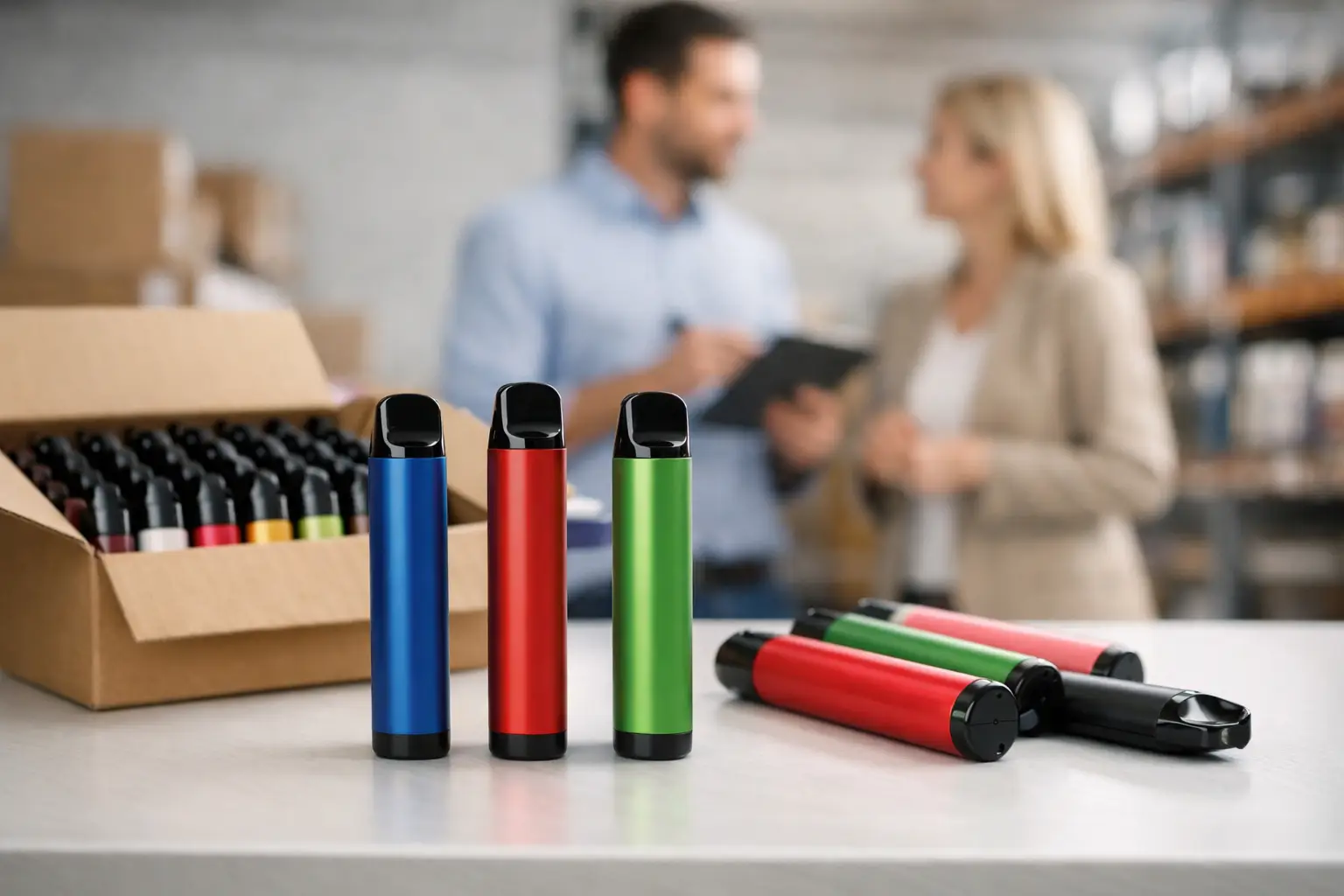


When a fast-moving SKU starts selling through faster than forecast, the issue is rarely demand alone. It is usually supply continuity, carton planning and confidence in product authenticity. That is exactly why iget bar plus bulk buy decisions matter for Australian trade buyers. If you are replenishing for a pharmacy, vape retail outlet or convenience-led store network, the buying model needs to support repeat volume without creating stock gaps or verification risk.
Why iget bar plus bulk buy makes commercial sense
IGET Bar Plus sits in the category many resellers prioritise because it combines strong brand recognition with repeat demand across established flavour preferences. For a retail operator, that means less effort spent pushing unfamiliar product and more focus on maintaining stock depth in lines customers already ask for.
Bulk purchasing improves more than unit economics. It gives buyers tighter control over ordering cadence, freight efficiency and shelf availability. Smaller ad hoc orders can appear lower risk, but they often create higher landed costs over time and increase the chance of running short on popular variants. For stores with regular customer traffic, that kind of inconsistency affects both revenue and buyer confidence.
The other commercial factor is procurement efficiency. A structured wholesale order is easier to process internally than multiple top-up purchases spread across the month. Teams can forecast better, allocate budget more clearly and reduce time spent chasing stock updates.
What trade buyers should assess before placing volume orders
The right wholesale arrangement is not simply about getting a low advertised price. It is about whether the supplier can support the operational realities of repeat trade supply. For IGET Bar Plus, that starts with genuine product verification. Counterfeit risk remains one of the most expensive problems in this category because it does not just affect sell-through. It can damage retailer reputation, trigger customer complaints and create unnecessary compliance pressure.
Stock consistency matters just as much. A supplier may show a product line, but that does not always mean reliable flavour-level availability or timely replenishment. For a serious reseller, broad SKU access is useful only if the range can actually be supplied in a stable way. If key flavours are regularly unavailable, margin planning becomes harder and stores may be forced into substitutions that do not move as quickly.
Minimum order requirements also need to be commercially workable. A well-structured B2B distributor sets thresholds that support trade supply while still allowing buyers to manage cash flow and inventory turn. For some operators, larger cartons make sense because throughput is predictable. For others, especially multi-site buyers testing sales mix by location, flexibility within a wholesale framework is more valuable.
The supply chain issues behind a weak bulk buy arrangement
A poor bulk supplier usually reveals itself in three places – uncertain stock visibility, slow dispatch and vague onboarding. None of these issues are minor for trade customers. If inventory information is unclear, purchasing teams cannot plan with confidence. If dispatch windows shift without notice, shelf availability suffers. If the account process is informal, the risk of fulfilment errors tends to rise with order size.
This is why experienced buyers look beyond headline pricing. A small difference in per-unit cost can be outweighed quickly by late deliveries, split shipments or inconsistent product allocation. In practice, the stronger wholesale partner is the one that can verify product authenticity, confirm available stock, process approved trade orders efficiently and move cartons through domestic freight without delay.
That supply-chain discipline is especially important for repeat IGET orders. Once a store establishes customer demand around specific product lines, replenishment speed becomes part of the retail offer. If stock is missing too often, customers do not wait around.
How to approach iget bar plus bulk buy planning
A sensible purchasing plan starts with sales data, not catalogue breadth. Review your recent movement by outlet, then identify the flavours and quantities that justify deeper stock positions. For high-turn locations, broader inventory depth often makes sense because replenishment intervals can be shorter and more predictable. For lower-volume sites, it may be better to hold a tighter SKU mix and reorder more strategically.
The next step is to align volume with freight practicality. A bulk order should reduce friction, not create warehouse congestion or tie up capital in slow-moving cartons. That means balancing tiered wholesale pricing against your actual stock turn. Buying too light often increases operational cost. Buying too deep in the wrong mix creates a different problem.
It also pays to assess whether your supplier is set up for account-based repeat purchasing. Trade buyers do not need a retail-style checkout experience dressed up as wholesale. They need a clear pathway for approved ordering, dependable invoice handling, and rapid fulfilment once stock is confirmed. Businesses such as IGET VAPES Wholesale Australia are positioned around that trade requirement rather than casual one-off purchases.
Stock profile matters more than catalogue size
A large range can look attractive, but it is the availability of recognised, high-turn SKUs that drives results. If IGET Bar Plus is a proven mover in your customer base, then the supplier relationship should support continuity in that specific line first. Catalogue expansion is secondary.
Freight speed should match product velocity
For a slower product category, dispatch delays may be manageable. For a recognised disposable line with regular demand, they are not. Fast, trackable domestic shipping is part of the wholesale value equation because it protects turnover and reduces the need for emergency reordering.
What a strong wholesale distributor should provide
For Australian trade buyers, a dependable IGET wholesaler should operate as a logistics partner rather than just a listing platform. That means verified stock, commercial pricing tiers, clear minimums, and order handling built for repeat business accounts. The process should feel structured from onboarding through to replenishment.
Authenticity verification should be treated as standard, not as a marketing extra. The same applies to dispatch reliability. A distributor that understands trade supply knows buyers are measuring more than product cost. They are also measuring how quickly stock moves from purchase order to receiving dock.
There is also value in supplier focus. A distributor with clear depth in IGET product lines is generally better positioned to support flavour-level availability and category continuity than a broad seller trying to cover every segment without stock discipline. In wholesale, specialisation usually improves execution.
Common buying mistakes with IGET Bar Plus volume orders
One common mistake is chasing the lowest visible price without checking whether the stock is genuine and physically available. Another is ordering purely on general category demand instead of actual store-level movement. A line may be strong nationally and still underperform in a specific trading area if the flavour profile is wrong.
Some buyers also underestimate the cost of fragmented replenishment. Multiple small orders can seem safer, but they often create higher freight exposure, more admin and more stockout risk. The better approach is to build an order cycle around your real sell-through rate and supplier lead time.
There is also an onboarding mistake that appears often in wholesale. Buyers sometimes assume all distributors operate with the same trade processes. They do not. Some are set up for commercial accounts and volume dispatch. Others are simply retail-facing businesses with bulk pricing added on top. That distinction matters once order frequency increases.
Choosing a supplier for repeat replenishment
The right question is not whether a supplier can fill one IGET Bar Plus order. It is whether they can support the fifth and fifteenth order with the same accuracy and speed. Repeatability is what makes a wholesale relationship commercially useful.
Look for consistency in communication, realistic stock commitments and a clear account structure. Ask whether domestic dispatch is trackable, whether pricing improves with volume, and whether product verification is built into the supply model. If those answers are unclear at the start, they usually become more costly later.
For pharmacies, specialty stores and approved retail channels managing recurring demand, wholesale purchasing should reduce uncertainty. A proper iget bar plus bulk buy arrangement does exactly that – it supports margin control, protects stock continuity and removes avoidable friction from the procurement cycle.
The strongest trade relationships are rarely the loudest. They are the ones that keep your shelves supplied, your orders moving and your purchasing team out of recovery mode.